
Researcher Spotlight: Divith Reddy
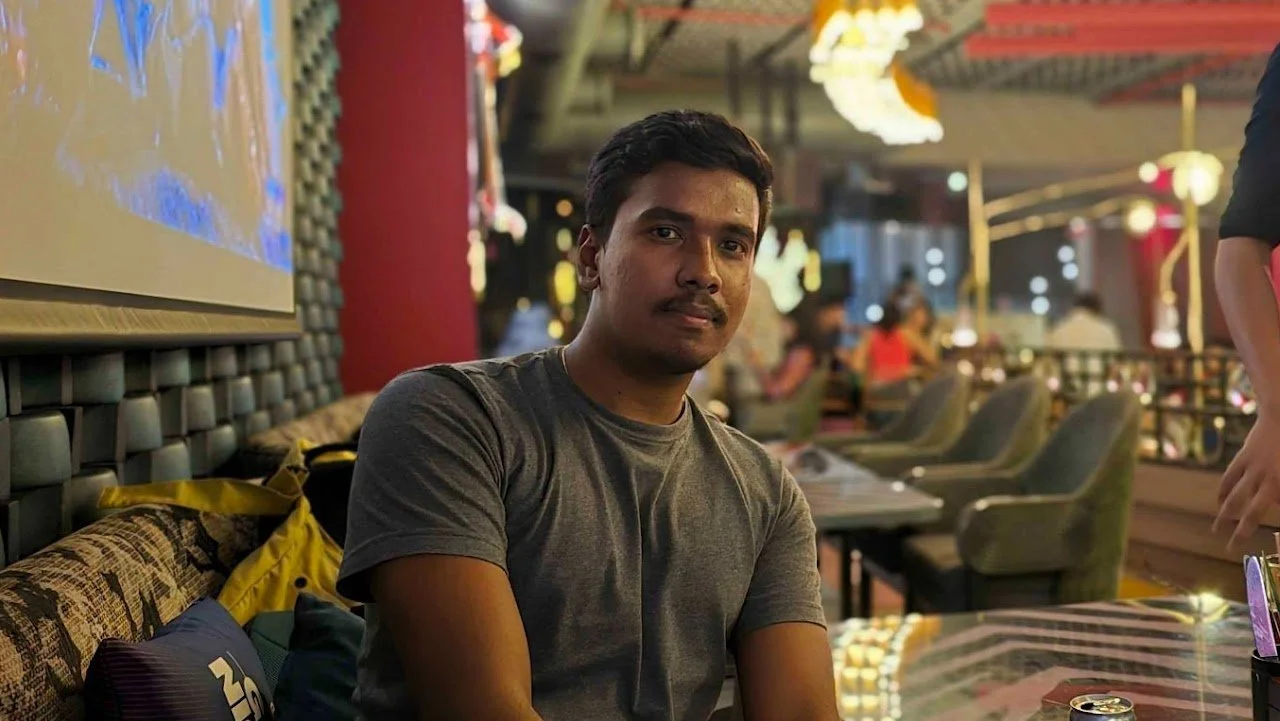
DIVITH REDDY, RESEARCH ASSOCIATE
SPACE LAB MEMBER SINCE MAY 2025
WEBSITE: https://sites.google.com/view/divith
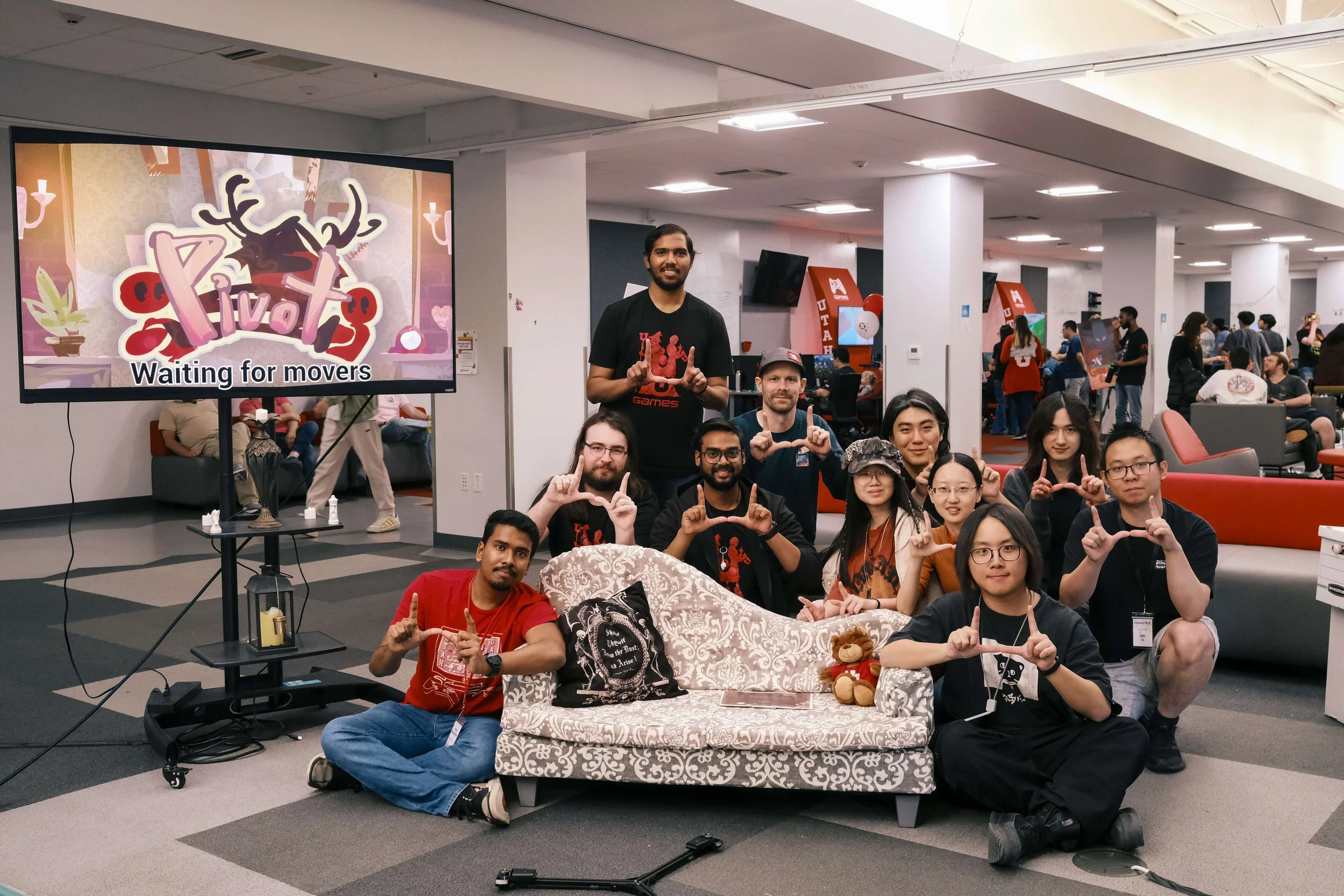
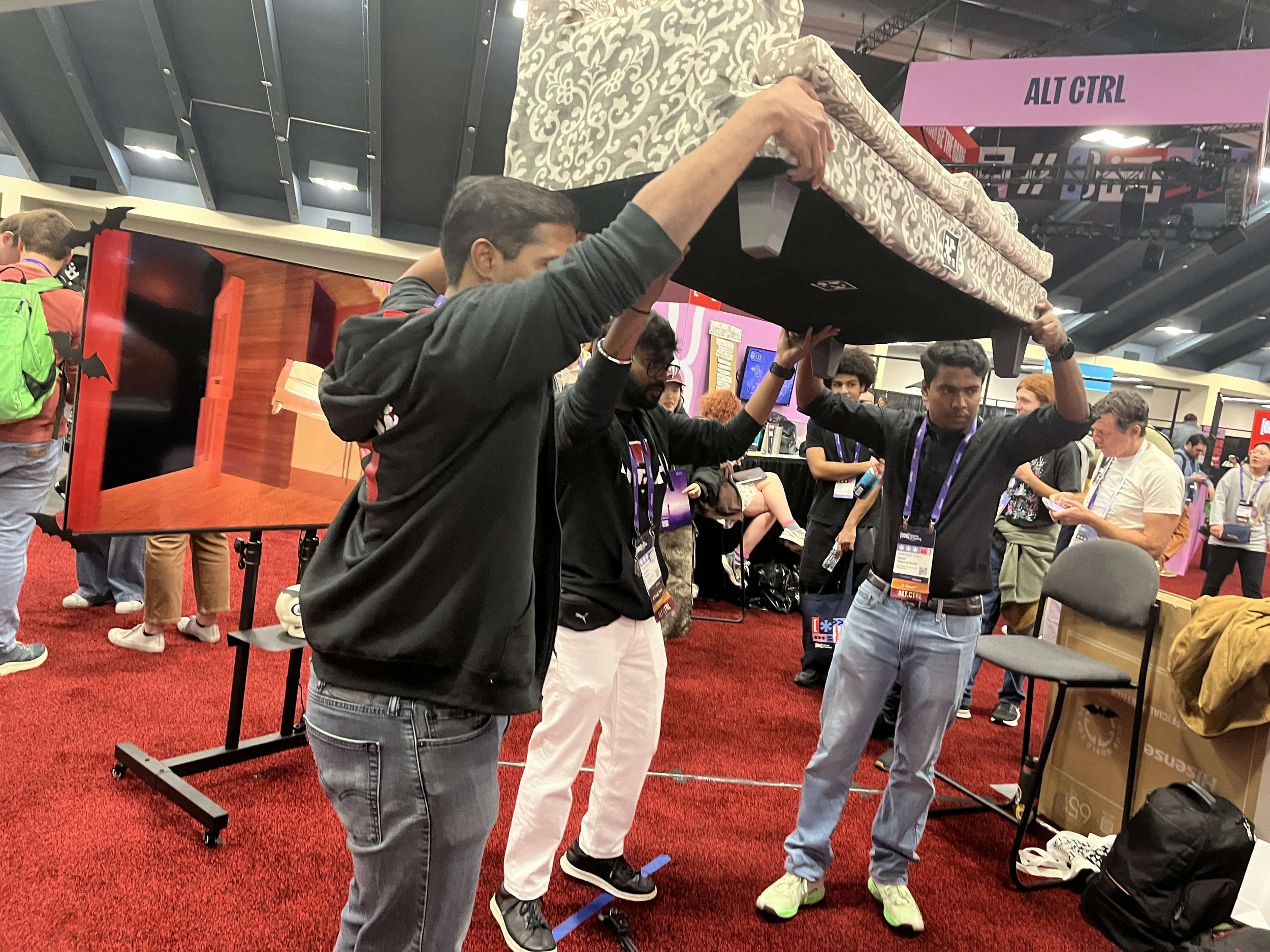
Divith’s alternative controller project, Pivot, being presented at Utah Games Launch and the Game Developer’s Conference in San Francisco, CA.
This month, we’re spotlighting Divith Reddy, a Research Associate in the SPACE Lab. Divith joined the lab in May 2025, and has since contributed to projects exploring how humans perceive virtual agents during dynamic interactions as well as how collaborative teams learn and navigate virtual spaces together.
In May 2026, Divith graduated from the Master of Entertainment Arts and Engineering program in the Division of Games at the University of Utah. Before joining the SPACE Lab, he worked as a Technical and 3D Artist at Viga Entertainment Technology, where he focused on motion capture and simulation. He earned his BE in Computer Science from the T John Institute of Technology in Bangalore, India.
Divith’s work in the SPACE Lab combines his background in game development, interactive systems, and emerging technologies. His projects investigate how people experience and collaborate in virtual and mixed reality environments, with the goal of creating more effective and engaging immersive experiences.
We asked Divith a few questions to learn more about his research journey, interests, and experience in the SPACE Lab.
What drew you to this field?
I have always been interested in learning new things, and I keep an open mind when exploring and implementing new technologies. I like being a generalist […] because it helps me understand how all of the pieces of interactive experiences come together. That curiosity is what drew me to virtual and mixed reality (VR/MR).
I previously worked in a virtual production studio, where I explored technologies such as motion capture, virtual cameras, and VR applications. That experience showed me how immersive technology can combine game development, human perception, design, and engineering to create completely new kinds of experiences.
What projects are you currently working on?
In the lab, I have been working on a cross-platform research system that allows both VR and PC users to be in the same space. The project focuses on studying navigation, spatial perception, and collaboration [across different devices]. I have worked on systems for player movement, avatar setup, multiplayer networking, and data collection. I have also worked on a study to understand how people perceive personal space in VR versus real life.
Outside of the lab, I have also worked on projects such as Operation P.L.U.S.H., a co-op horde defence game, where I served as the lead engineer and contributed to combat design, gameplay systems, Nintendo Switch platform development, and optimization. I also worked on Pivot, a chaotic co-op alternative controller game where players physically move a real couch to control a virtual one. Pivot was showcased at the University of Utah Launch event and presented in the alt.Ctrl section at GDC, where it was nominated for the People’s Choice Award.
What has been the most interesting or surprising thing you’ve learned through research?
One of the most interesting things I’ve learned […] is how important it is to consider edge cases. In games, bugs can usually be fixed later, but in research if the system does not handle all possible outcomes correctly, it can lead to poor data collection. Fixing a bug midway through data collection can create complications [such as having to discard data]. Research has taught me to think more carefully about how I program systems, test different scenarios, and ensure data being collected is accurate.
What skills have you developed while working in the lab?
While working in the lab I have developed a better understanding of how to collaborate effectively. I have learned how important it is to communicate, share progress, and build systems that other people can understand and use.
I have also become more comfortable learning new things and working with new technologies. Repeating certain tasks has helped me improve […and] see problems differently. Now when I start building a system or a project, I think about possible issues early on and work around them. I may not catch every problem at the start, but having the mindset helps me avoid some mistakes and solve problems more easily.
What is your favorite part of the experience so far?
My favorite part of the experience has been meeting new people and working with different technologies. I am excited to work with the Vicon system in the lab, as it opens many interesting possibilities for motion capture and MR research. During my time in the lab I was also able to visit Avalanche Software, and I really enjoyed seeing how things work in a professional studio environment. The research I do has given me a lot to talk about when I meet people, […] and that has made the experience even more exciting for me.
What advice would you give to students who are interested in getting involved with research?
My advice would be to be curious and open to learning new things. Research often involves working with new technologies that you may not fully understand at first, so it is important to not be afraid to try new things and learn along the way.
Stay updated on new trends and technologies, especially in fields [involving emerging technologies]. Be open to suggestions, ask questions, and learn from the people around you. Technical skills are important, but being willing to learn and improve is just as important.
What are your career goals?
My goal is to work as a gameplay programmer, systems engineer, or VR developer on projects that challenge me technically and help me keep learning. I am interested in building interactive systems for games, VR, and MR.
Long term, I want to continue working on experiences that explore new ways people can play, collaborate, and interact with virtual worlds.
What are some of your hobbies or interests outside of work?
Outside of work I love playing games, basketball, watching movies, riding motorcycles, traveling, and photography. I like exploring new places, and photography lets me capture those experiences.
Share a fun fact about yourself.
I have [really good] spatial awareness, which has helped me work as a 3D environmental artist.
And some final thoughts about your experience in the lab.
My experience in the lab has been really valuable, helping me grow as both a developer and a researcher. It has changed the way I think about building systems, especially when it comes to testing, edge cases, and making projects scalable. I have also enjoyed being part of a collaborative environment where I can learn from different people, work with new technologies, and contribute to projects exploring VR and MR. Overall, the lab has given me a lot of confidence, new skills, and experiences that I will carry forward into my future work.
We’re grateful to have Divith as a part of the SPACE Lab, and look forward to his upcoming accomplishments! Divith’s work is currently being prepared for manuscript submission to several leading extended reality venues.
